Solid Organics: The Long-Term Foundation
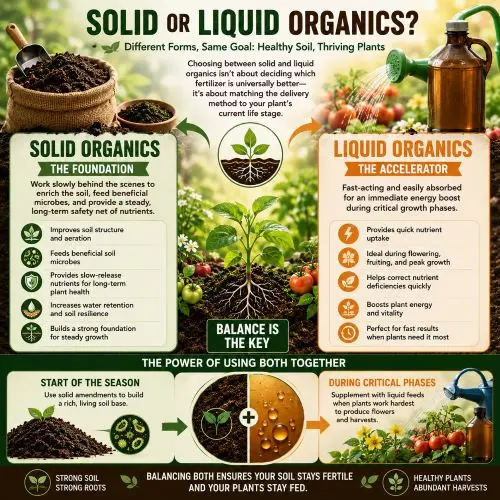
Solid organic fertilizers (such as vermicompost, bone meal, blood meal, and well-rotted manure) release their nutrients slowly as they are broken down by soil microorganisms.
When to Use Solid Organics:
- During Soil Preparation: Always mix solid organics into your soil before planting new seeds or transferring saplings. This creates a rich, fertile base.
- Early in the Season: Apply them at the start of the spring or growing season to establish a steady, baseline supply of nutrients.
- To Improve Soil Structure: If your soil is sandy and loses water quickly, or is clay-heavy and compacted, solid organics add necessary bulk and structure, improving water retention and aeration.
- For Sustained, Low-Maintenance Growth: Ideal for established trees, shrubs, and perennial beds that thrive on a steady, low-dose diet rather than sudden growth spikes.
How to apply: Dig them into the top few inches of the soil or use them as a "top-dressing" around the base of the plant, gently scratching them into the surface before watering.
Liquid Organics: The Quick-Fix Energy Boost
Liquid organics (like vermicompost tea, seaweed extract, and fish emulsion) are concentrated liquids that are diluted with water. They bypass the soil-breakdown phase and are absorbed immediately by the plant’s roots or leaves.
When to Use Liquid Organics:
- To Correct Nutrient Deficiencies: If a plant is showing sudden signs of stress—like yellowing leaves (nitrogen deficiency) or stunted growth—liquid fertilizer delivers a fast-acting rescue dose.
- During Peak Growth & Production: Use them when plants are working their hardest: right before flowering, during fruit development, or when vegetable crops are actively producing.
- For Container Gardens and Potted Plants: Potted soil flushes out nutrients quickly with every watering. Regular, diluted liquid feedings keep container plants from starving.
- As a Foliar Spray: When sprayed directly onto leaves, plants can absorb nutrients through their stomata (microscopic pores) even faster than they do through their roots.
How to apply: Dilute with water according to package instructions and pour directly onto the root zone, or use a spray bottle to mist the undersides and tops of the leaves early in the morning.
Summary Comparison
| Feature | Solid Organics | Liquid Organics |
|---|---|---|
| Primary Target | Feeds the soil | Feeds the plant |
| Absorption Speed | Slow and steady (weeks to months) | Fast and immediate (days) |
| Frequency | Once every 1 to 3 months | Every 1 to 2 weeks |
| Best For | Building soil health, potting mixes | Boosting flowers/fruits, emergency feeding |
Export to Sheets
The Best Strategy: Use Both Together
For the healthiest garden, you don't actually have to choose just one. The most successful gardeners use them in tandem:
- Build the foundation by mixing solid vermicompost into your potting mix or garden beds at the beginning of the season to sustain the soil.
- Boost the performance by watering with a liquid seaweed or compost tea every couple of weeks when your plants start flowering and fruiting.

Liquid vs Solid Organics : When to use which