Vermiculite: A Natural Soil Booster for Healthy Plants and Moisture-Rich Gardens
Description: Learn how vermiculite acts like a natural sponge for your garden, keeping plants hydrated, saving water, and boosting root growth.
If your potted plants dry out too quickly or your soil turns hard and compacted, vermiculite is the perfect solution. This lightweight, golden-brown mineral is a favorite tool for gardeners who want to keep their plants perfectly hydrated and healthy.
What is Vermiculite?
Vermiculite is a completely natural mineral mined from the earth. To make it ready for gardening, raw mineral flakes are heated in commercial furnaces to nearly 1000°C.
This extreme heat causes the moisture inside to turn to steam, puffing the flakes up into lightweight, accordion-like shapes. Because it is processed at such high heat, it is completely sterile, non-toxic, and free of pests or diseases.
4 Ways It Helps Your Garden
Acts Like a Sponge: Vermiculite can hold up to 3 to 4 times its weight in water. It traps moisture in the soil, keeping it damp so you don't have to water your plants as often.
Stores Plant Food: It has a natural magnetic quality that locks onto nutrients from your fertilizer, stopping them from washing away and releasing them safely to the roots later.
Prevents Hard Soil: Because it stays light and fluffy, it creates tiny air pockets in the dirt, preventing the soil from packing down into a hard brick.
Never Rots: It is an inorganic mineral, meaning it will never decay, break down, or wear out in your garden beds.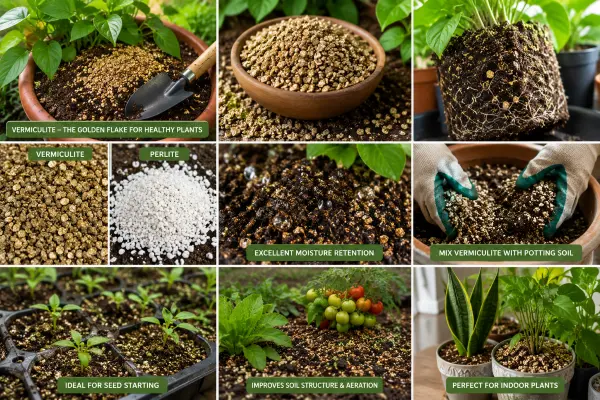
The Difference: Vermiculite vs. Perlite
Many people confuse vermiculite with perlite (the small white dots that look like Styrofoam in potting soil). While both make soil lighter, they do opposite jobs:
Choose Vermiculite if: You have thirsty plants like ferns, tropicals, or tomatoes and need to hold onto moisture.
Choose Perlite if: You have desert plants like cacti, succulents, or orchids and need water to drain away quickly.
How to Mix It into Your Soil
You can add vermiculite to your garden using these easy recipes:
For General Houseplants: Mix 1 part vermiculite with 3 parts regular potting soil.
For Starting Seeds: Blend 1 part vermiculite with 1 part peat moss or coco coir. This keeps seeds perfectly damp so they sprout quickly without drying out.
For Vegetable Beds: Mix a layer of vermiculite into the top 6 inches of your garden soil to help plants survive hot summer days.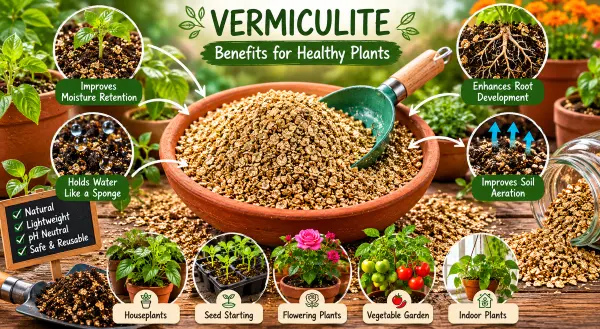
Common Mistakes to Avoid
Don’t Use for Succulents: Because it holds water so well, using it for cacti or succulents can trap too much moisture around their roots, causing them to rot.
Don’t Crush It: Handle vermiculite gently when mixing it. Pressing down too hard can flatten the accordion flakes, destroying the air pockets your roots need to breathe.Conclusion: Smart, Low-Maintenance Gardening
Vermiculite takes the guesswork out of watering your garden. By acting as a permanent, underground water reservoir, it protects your plants from drying out while keeping the soil loose and airy. Whether you are starting delicate seeds or trying to keep your indoor houseplants alive, a few handfuls of vermiculite will create the perfect home for thriving roots.
Frequently Asked Questions (FAQs)
1. Is vermiculite safe to use for vegetables?
Yes, modern horticultural vermiculite is strictly tested, completely non-toxic, and 100% safe to use for growing organic fruits and vegetables.
2. Does vermiculite ever expire?
No. Because it is a mined mineral and not an organic material, it will never rot or decompose. Once mixed into your soil, it works permanently.
3. Can I grow plants in pure vermiculite?
You can sprout seeds in it, but vermiculite contains no natural plant food on its own. If you grow plants in it alone, you must consistently add liquid fertilizer.

Vermiculite: The Ultimate Soil Amendment for Better Water Retention