Jeevamrutham: A Natural Boost for Healthy Soil and Plants
Meta Description: Learn how to make and use Jeevamrutham, a traditional Indian bio-fertilizer that naturally revives soil, boosts plant growth, and protects your garden.
Synthetic chemical fertilizers give plants a quick boost, but they leave the soil dry and lifeless over time. Jeevamrutham (meaning "nectar of life") is a traditional Indian bio-fertilizer designed to do the opposite: it feeds the soil, introducing millions of beneficial microbes that help plants absorb nutrients naturally.
The Core Ingredients
Jeevamrutham uses simple, natural ingredients that work together to create a powerful soil probiotic:
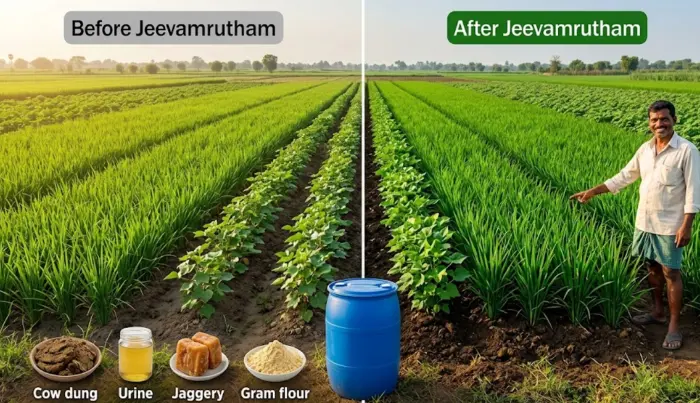
- Fresh Cow Dung (10 kg) : Breeds helpful bacteria and fungi.
- Cow Urine (5–10 Liters) : Provides a natural source of minerals and nitrogen.
- Jaggery / Raw Sugar (2 kg) : Feeds the microbes so they multiply quickly.
- Gram Flour / Besan (2 kg) : Gives a protein boost to speed up microbial - growth.
- Virgin Soil (A handful) : Introduces healthy, local wild microbes.
- Water (200 Liters) : Serves as the base for fermentation.
Step-by-Step Preparation
Making a standard 200-liter batch is easy:
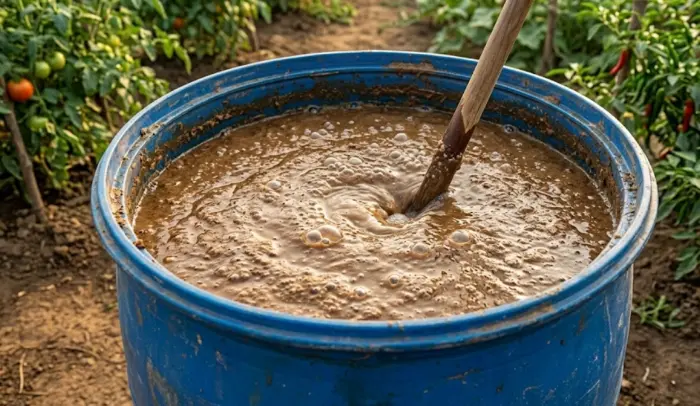
- Mix the Base: In a large plastic drum (avoid metal), mix the cow dung and cow urine into a smooth paste using a wooden stick.
- Add the Food: Dissolve the jaggery and gram flour in a separate bucket of water, then pour it into the drum.
- Inoculate: Stir in a handful of fresh garden or forest soil.
- Fill and Cover: Top off the drum with water, stir vigorously in a clockwise direction, and cover with a breathable jute bag or cotton cloth.
- Ferment: Leave the drum in the shade for 4 to 7 days. Stir the mixture clockwise for 5 minutes twice every day.
How to Apply It
- Jeevamrutham is safe for vegetables, flowers, and fruit trees. For best results, use it within 7 to 10 days of preparation.
- Soil Drenching: Mix 1 liter of Jeevamrutham with 10 liters of water. Pour it directly onto the soil around the roots once every 15 days.
- Foliar Spray: Strain the liquid through a fine cloth, mix 1 liter with 20 liters of water, and spray it directly onto plant leaves once a month.
Common Mistakes to Avoid
- Using Metal Drums: Metal reacts with the mixture during fermentation. Always use plastic or clay containers.
- Direct Sunlight: Keep the drum in a cool, shaded area, or the heat will kill the beneficial microbes.
- Storing It Too Long: The mix is most potent between days 4 and 10. After 14 days, the microbes run out of food and begin to die off.
Conclusion: The Ultimate Soil Rejuvenator
At its core, gardening and farming are about nurturing the life beneath our feet. Jeevamrutham provides an elegant, zero-waste solution that works in harmony with nature rather than trying to bypass it. By investing just a little time into brewing this traditional organic tonic, you move away from chemical dependency and toward a self-sustaining ecosystem. The result is a vibrant, resilient garden that rewards you with healthier plants, stunning blooms, and clean, chemical-free food for generations to come.
Frequently Asked Questions (FAQs)
1. Does Jeevamrutham smell bad?
A. It has a strong smell for the first two days. However, as it ferments, the odour changes into a mild, earthy, sour-sweet scent.
2. Can I use dung from any cow?
A. Dung from native Indian cow breeds (Desi cows) is preferred because it contains a higher diversity of gut microbes. However, if unavailable, dung from crossbreed or jersey cows still works well.
3. Is it safe for indoor plants?
A. Yes, it is completely safe, because of the initial earthy aroma, it is best to dilute it well (1:15 ratio) and keep your windows open on the day you apply it.

Jeevamrutham: