The Invisible Workforce: Why Bio Fertilizers Are the Future of Sustainable Gardening
When we think about feeding plants, the first image that often comes to mind is adding chemical fertilizers or synthetic nutrients to the soil. For many years, these quick solutions were the standard choice. Today, gardening is moving toward a more natural and sustainable approach that works with nature instead of against it.
Bio-fertilizers are changing the way plants are grown, from backyard gardens to decorative indoor plants displayed in elegant ceramic planters. These natural plant enhancers support healthy growth by improving the soil ecosystem and helping roots absorb nutrients more efficiently.
What Exactly Is a Bio-Fertilizer?
Unlike chemical fertilizers that directly supply nutrients for immediate growth, bio-fertilizers contain living microorganisms.
These beneficial microbes include bacteria, fungi, and algae that settle around the root zone and work naturally beneath the surface. Instead of feeding the plant directly, they improve nutrient availability, support root activity, and strengthen soil health over time.
You can think of them as a natural support system living inside the potting mix, helping plants stay healthy from the roots upward.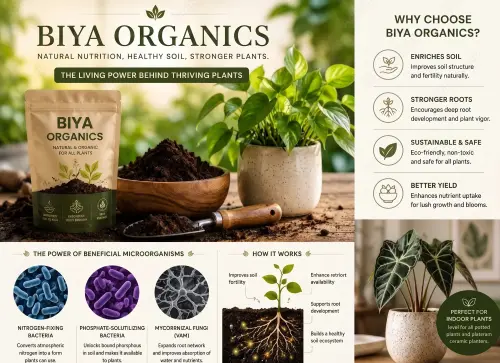
The Key Microorganisms Behind Bio-Fertilizers
Different microorganisms perform different functions in the soil.
Nitrogen-fixing bacteria
Nitrogen is essential for healthy green leaves and vigorous plant growth. Beneficial microbes such as Rhizobium and Azotobacter capture nitrogen from the atmosphere and convert it into forms plants can absorb.
Phosphate-solubilizing bacteria
Phosphorus is often present in soil but unavailable to roots. These microbes help unlock it and make it easier for plants to use for stronger roots and healthy flowering.
Mycorrhizal fungi (VAM)
These beneficial fungi attach to root systems and expand their ability to absorb water and nutrients, improving plant strength and resilience.
Why More Gardeners Are Choosing Bio-Fertilizers
Switching to bio-fertilizers offers several long-term benefits.
| Feature | Chemical Fertilizers | Bio-Fertilizers |
|---|---|---|
| How they work | Deliver nutrients directly | Improve soil biology naturally |
| Soil health | Can cause salt buildup over time | Improves soil structure |
| Root safety | Risk of chemical burn | Gentle and root-friendly |
| Environmental impact | Can affect groundwater | Natural and eco-friendly |
A Perfect Choice for Decorative Gift Pots
For statement plants displayed in ceramic gift pots, bio-fertilizers are especially useful.
Indoor containers are closed growing systems, and over time the potting mix can become inactive and lose vitality.
Adding bio-fertilizers helps bring the growing medium back to life. This supports stronger roots, improves nutrient movement, and helps ornamental plants maintain healthy foliage and vibrant growth without chemical buildup.
Plants such as Bird of Paradise and Red Emerald Philodendron respond especially well to this balanced natural support.
Simple Tips for Using Bio-Fertilizers
A few easy habits help beneficial microbes stay active and effective.
- Avoid harsh chemicals: Strong pesticides and chemical fungicides may reduce microbial activity.
- Maintain moisture balance: Microorganisms perform best when the potting mix stays lightly moist without becoming soggy.
- Use breathable potting mix: A well-aerated mix allows both roots and beneficial microbes to grow efficiently.
Conclusion
Choosing bio-fertilizers over synthetic chemical inputs supports stronger and healthier long-term plant growth.
By improving the natural soil ecosystem and encouraging root development, bio-fertilizers help plants thrive in a healthier and more sustainable way.
Whether you are caring for an outdoor garden or styling elegant indoor plants in premium ceramic containers, bio-fertilizers offer a clean and reliable way to encourage lush growth, vibrant foliage, and lasting plant wellness from the roots up.

Bio Fertilizers: A Natural Solution for Healthier Plants and Sustainable Gardening