The Plant Survived the Store. Will It Survive Your House?
A Beginner's Guide to Keeping Indoor Plants Alive (Without Becoming a Plant Expert)
You saw it at the nursery.
The leaves were perfect. The plant looked healthy. You imagined it transforming your room into a Pinterest-worthy green oasis.
A week later, the leaves are turning yellow.
A month later, it's hanging on for dear life.
Three months later, you're standing over a pot of soil wondering where it all went wrong.
Sound familiar?
You're not alone.
The biggest myth in the plant world is that some people have a "green thumb" and others don't. In reality, most indoor plants die for just a few predictable reasons—and once you understand them, keeping plants alive becomes surprisingly easy.
If you've ever killed a plant (or several), this guide is for you.
Rule #1: Stop Watering on a Schedule
This is the mistake that kills more plants than anything else.
Many beginners water every Sunday because they think consistency is important.
Plants disagree.
A plant doesn't care what day it is.
It cares whether its soil is dry.
Sometimes your plant might need water after four days. Sometimes after two weeks.
Before watering, stick your finger about an inch into the soil.
- Dry? Water.
- Moist? Wait.
That's it.
Most houseplants would rather be slightly thirsty than constantly drowning.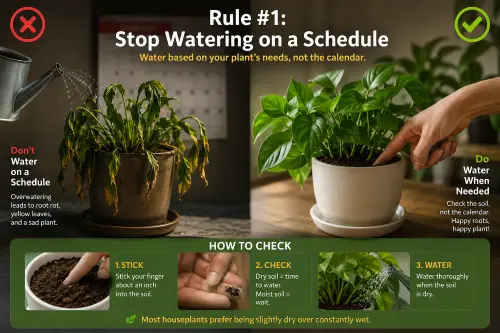
Rule #2: Your Plant Isn't Dying—It's Probably in the Wrong Spot
Imagine trying to live your entire life in a dark closet.
That's what some plants experience.
Light is food for plants. Without enough of it, they struggle no matter how carefully you water them.
Quick Light Guide
☀️ Bright Direct Light
- Aloe Vera
- Cactus
- Succulents
🌤️ Bright Indirect Light
- Monstera
- Pothos
- Rubber Plant
🌥️ Low Light
- Snake Plant
- ZZ Plant
- Chinese Evergreen
A simple trick:
If you can comfortably read a book in that spot during the day, many indoor plants can survive there too.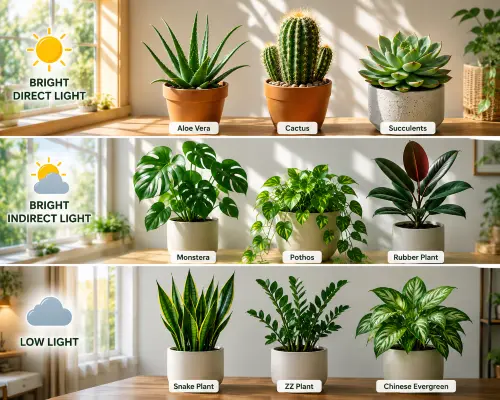
Rule #3: Bigger Pots Are Not Better
Many beginners buy a small plant and immediately move it into a huge pot.
It seems logical.
More space = more growth.
Unfortunately, plants don't work that way.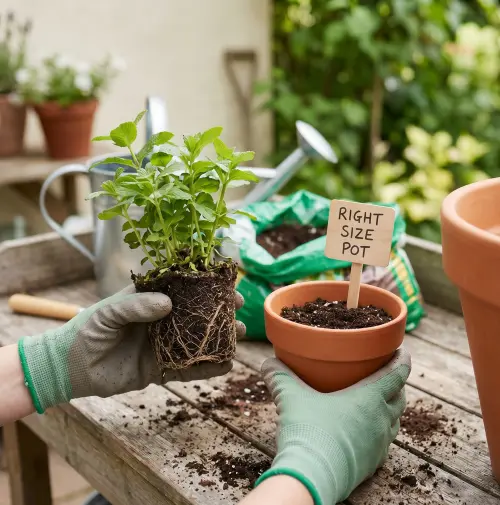
Large pots hold excess moisture around the roots for longer periods, increasing the chance of root problems.
Choose a pot only slightly larger than the current root ball.
Your plant will thank you.
Rule #4: Learn to Read the Leaves
Plants communicate.
They just don't use words.
Yellow Leaves
Usually caused by overwatering.
Brown Crispy Tips
Often caused by dry air, inconsistent watering, or mineral buildup.
Drooping Leaves
Can indicate either too much or too little water.
Pale Growth
Often means the plant needs more light.
Think of leaves as your plant's text messages.
The sooner you learn to read them, the easier plant care becomes,
Rule #5: Don't Love Your Plant to Death
Many beginners become helicopter plant parents.
They move the plant daily.
They water constantly.
They fertilize every week.
They panic over every tiny leaf spot.
Plants actually prefer stability.
Once you find a good location, leave it there.
Sometimes the best thing you can do is absolutely nothing.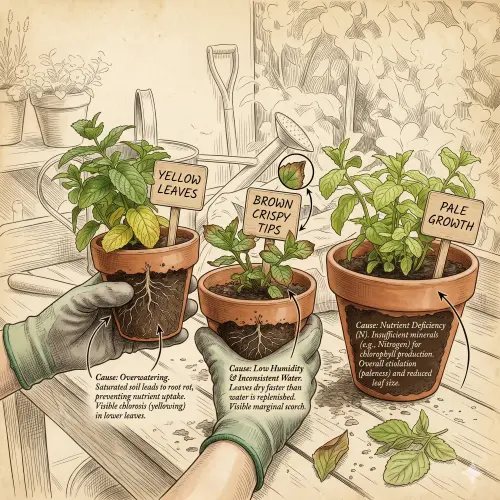
Rule #6: Drainage Holes Are Non-Negotiable
Imagine standing in ankle-deep water all day.
That's how roots feel in a pot without drainage.
Always choose pots with drainage holes.
Always.
Even the most beautiful planter becomes a plant killer if water has nowhere to go.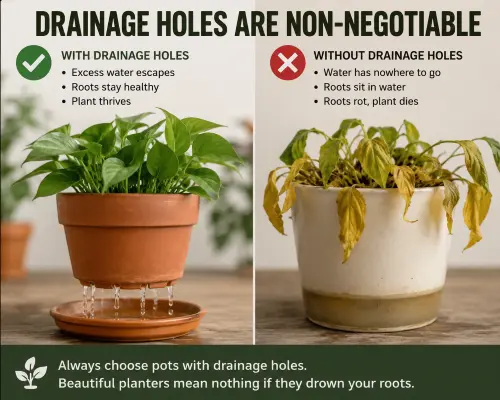
Rule #7: Dust Is a Hidden Enemy
Plant leaves collect dust just like furniture.
The difference?
Dust blocks light.
A dusty plant can't efficiently absorb sunlight.
Every few weeks, gently wipe leaves with a damp cloth.
Not only will the plant look better, but it will also perform better.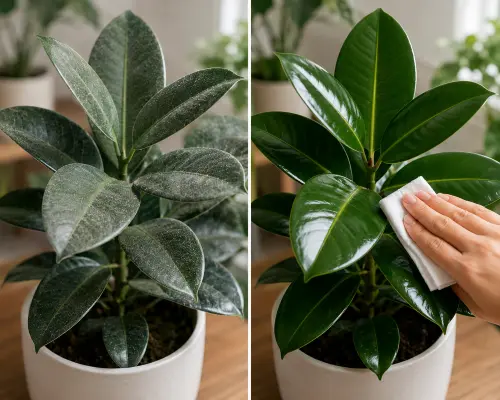
Rule #8: Not Every Plant Wants the Same Treatment
A cactus and a fern have completely different personalities.
One loves dry conditions.
The other prefers consistent moisture.
The secret isn't finding one perfect care routine.
It's understanding the needs of the plant you own.
Start by learning:
- How much light it needs
- How often it likes water
- Whether it enjoys humidity
- How fast it grows
Just these four things can dramatically improve your success rate.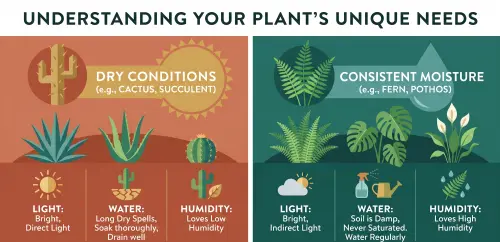
Rule #9: New Leaves Matter More Than Old Leaves
Many beginners focus on damaged leaves.
Experienced plant owners focus on new growth.
An old leaf turning yellow isn't always a problem.
Plants naturally replace older leaves over time.
The real question is:
Is the plant producing new healthy growth?
If the answer is yes, you're probably doing something right.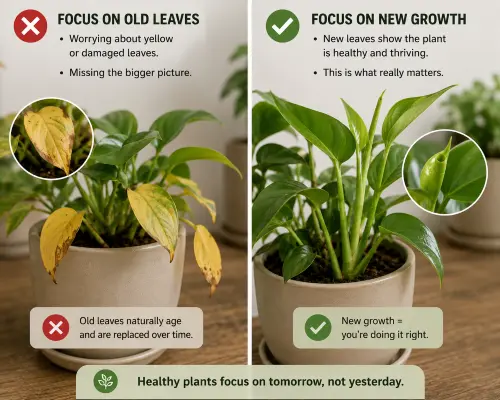
Rule #10: Start with Plants That Want to Live
Not all plants are beginner-friendly.
Some are dramatic.
Some are demanding.
Some seem determined to test your patience.
If you're just getting started, choose plants known for being forgiving:
🌿 Snake Plant
🌿 ZZ Plant
🌿 Pothos
🌿 Spider Plant
🌿 Chinese Evergreen
🌿 Rubber Plant
These plants tolerate beginner mistakes far better than more sensitive varieties.
The Truth About Plant Care
Most successful plant owners aren't experts.
They simply observe.
They notice when soil dries.
They pay attention to leaves.
They learn from mistakes.
Every thriving indoor jungle started with a single plant and a few failures along the way.
So if you've killed plants before, congratulations.
You're already learning.
Because the goal isn't to become a perfect plant parent.
It's to become a slightly better one with each new leaf that appears.
And before you know it, your home won't just have plants.
It'll have a thriving collection of living things that make every room feel brighter, calmer, and more alive........,

How to Keep Indoor Plants Alive: A Beginner's Guide That Actually Works