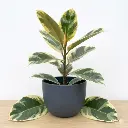
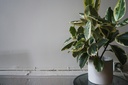
Variegated Rubber Plant
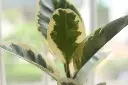
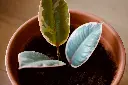
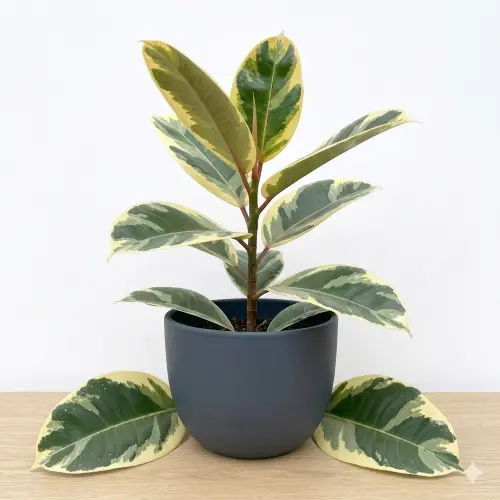
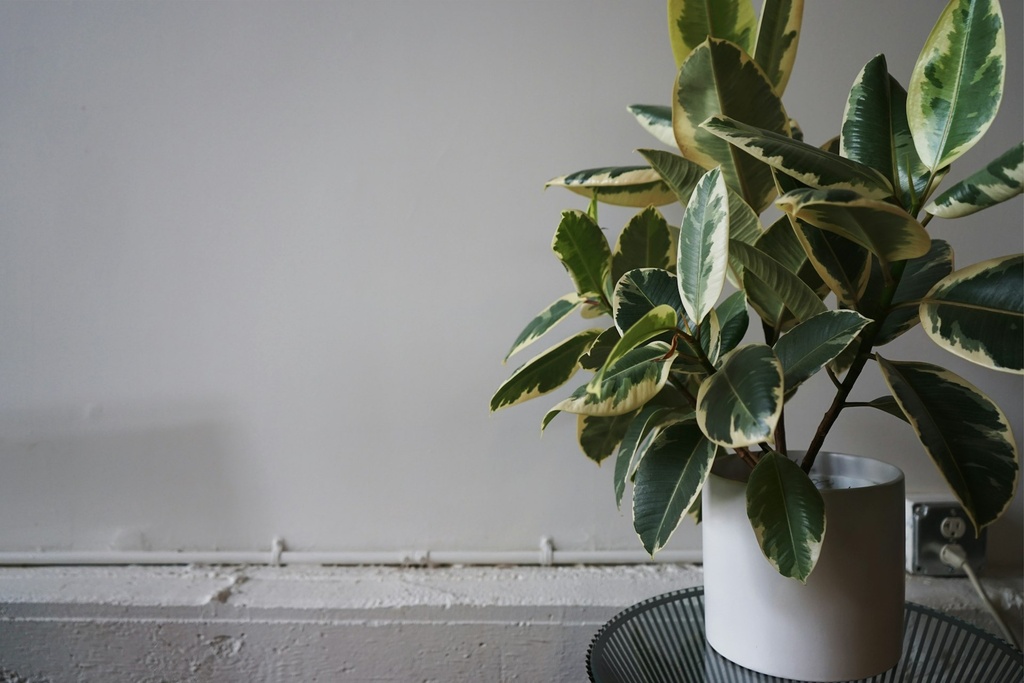
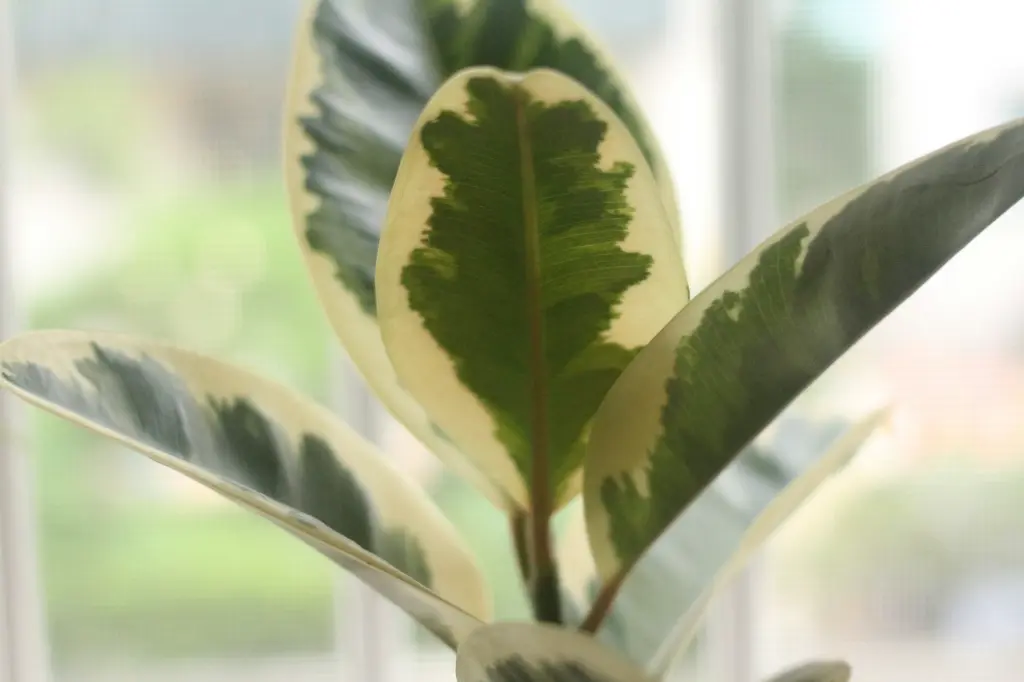
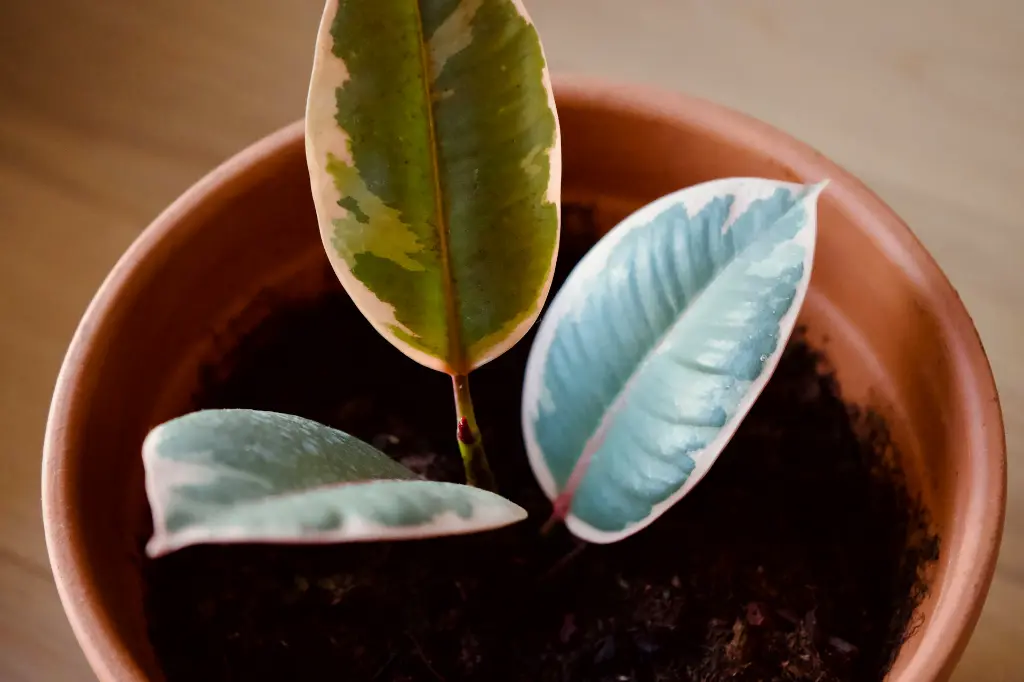
The Variegated Rubber Plant (Ficus elastica 'Tineke' or 'Ruby') is a spectacular, bold indoor tree celebrated for its dramatic, multicolored foliage. Unlike the classic solid green rubber plant, variegated cultivars feature broad, leathery leaves splashed with an artistic, camouflage-like pattern of cream, ivory, mint green, and soft gray-green. Emerging new leaves often feature a stunning pink or ruby-red hue, making it a highly sought-after focal point for modern interior design.
Plant Overview
- Product Name: Variegated Rubber Plant (Ficus elastica variegated cultivars like 'Tineke' or 'Ruby')
- Category: Houseplants, Indoor Trees, and Ornamental Foliage
- Product Type: Live evergreen tropical perennial tree
- Form / Texture: Upright, robust, and tree-like growth structure with thick, sturdy stems and large, rigid, highly glossy oval leaves
- Suitable For: Floor planters, living room corners, brightly lit offices, and well-lit entryways
- Application: High-impact interior decoration, structural design framing, and architectural indoor tree styling
Core Functions & Value
- Functions as a colorful alternative to standard green indoor trees, offering a striking canvas of cream, green, and pink tones.
- Provides a vertical structural anchor for large rooms or empty corners without taking up massive horizontal floor real estate.
- Effectively captures bright light on its broad, lacquered leaf surfaces, brightening up neutral or minimalist living spaces.
- Features tough, thick-skinned foliage that handles interior humidity levels better than delicate, thin-leaved tropical plants.
Botanical Features
- Large Oval Leaf Blades: Thick, leathery, oversized leaves ($8\text{ to }12\text{ inches}$ long) featuring irregular margins of cream or ivory surrounding a green core.
- Rigid Central Trunk: A sturdy, woody main stalk that supports the heavy leaf canopy and can eventually grow several feet tall.
- Sticky Milky Latex: A thick, white internal sap that functions as the plant's natural defense mechanism against pests and physical damage.
Key Performance Traits
- High Visual Presence: Large leaf sizes ensure the plant functions as an unmistakable, gallery-worthy statement piece.
- Durable Foliage: Rubbery leaf structure keeps it naturally resilient against tearing or sudden structural drooping.
- Predictable Growth Habit: Grows primarily straight upward from a single trunk, making it exceptionally easy to frame within narrow alcoves.
- Longevity Under Care: Can mature into a beautifully branched indoor tree that thrives in the same home layout for decades.
Cultivation Requirements
- Light: Demands plenty of bright, filtered indirect sunlight. Variegated tissue lacks chlorophyll, so it needs more light than green varieties to maintain its bright cream patches.
- Soil: Requires a rich, highly porous, standard potting mix combined with a generous amount of perlite and orchid bark.
- Moisture: Soil must undergo a thorough dry-down interval; water deeply only when the top $2\text{ to }3\text{ inches}$ of the container feels completely dry.
- Temperature: Thrives in steady warmth ranging between 16°C and 27°C; must be safely kept away from cold drafts or air conditioning units.
Care Instructions
- Always plant in containers featuring clear drainage holes to safeguard the root ball from water logging and rot.
- Pour water smoothly over the substrate until it escapes through the bottom drainage ports, then immediately clear out any runoff water from the base saucer.
- Wipe the broad leaf plates with a damp cloth every few weeks to clear away dust barriers that hinder sunlight absorption.
- Feed with a balanced liquid houseplant fertilizer diluted to half-strength once a month strictly during the active spring and summer months.
Primary Applications
- High-visibility living room floor corners and alcoves.
- Well-lit corporate offices, boardrooms, and hotel lobbies.
- Modern, bohemian, and minimalist home decor accenting.
- Sun-drenched indoor patios, glass atriums, and enclosed porches.
- Bright hallway entryways with tall ceilings.
Strategic Pros
- Retains its bold, artistic colors permanently if provided with correct bright ambient lighting.
- Extremely responsive to topping; pinching the main stem tip forces the tree to branch out into a bushier shape.
- Less prone to sudden total leaf-drop dramas compared to its cousin, the Weeping Fig.
- Sturdy trunk resists leaning or falling under its own weight as the plant ages.
Risks & Limitations
- Toxicity Warning: The internal white latex sap contains compounds that are toxic to cats and dogs if ingested, and a skin irritant to humans.
- Variegation Reversion: If the plant is forced to live in the dark, low-light spaces, new leaves will lose their cream patterns and turn solid green to survive.
- Browning Spots: The cream-colored edges are fragile; overwatering or extreme dry air will cause these light patches to develop unsightly brown burns.
- Sensitivity to Relocation: May show stress or drop its lowest leaves if shifted rapidly between environments with different light levels.
Handling & Upkeep Tips
- Rotate the container a quarter-turn every single week to ensure all sides get equal light, preventing the trunk from leaning toward windows.
- Never use commercial chemical leaf-shine products; they can clog the stomata pores of the leaves. Clean water on a soft cloth is all it needs.
- If the tree gets too tall for your room, cleanly prune the top stalk in spring to freeze its height and encourage a broader canopy.
Prevention & Operational Safety
- Always wear protective gardening gloves during pruning sessions to shield skin from the sticky, irritating white sap.
- If sap gets onto your hands, wash it off quickly with soap and warm water before it dries into a tough, rubbery film.
- Ensure the heavy pot rests on a firm, flat surface or a rolling plant caddy if you need to clean the surrounding floor area.
Ideal Use-Cases
- Sunlit living rooms with large, bright windows
- Modern minimalist interiors looking for a touch of organic art
- Pet-free households wanting a tall focal tree
- Offices with bright, consistent overhead or window light
- Plant parents ready to upgrade from standard all-green plants
Interesting Trivia
- While called a "Rubber Plant," this species is not the primary commercial source of natural rubber (which comes from Hevea brasiliensis); however, its sap was used locally for centuries to make crude rubber balls and waterproofing compounds.
- In its native habitats across Northeast India, Sumatra, and Java, Ficus elastica can grow into an absolute giant over $100\text{ feet}$ tall, throwing out massive buttress roots that are woven into living bridges.
Summary
The Variegated Rubber Plant is an exceptional indoor tree that brings a splash of living art into bright spaces. By respecting its simple rules—ample indirect light to protect its colors, and a patient hands-off watering routine—this durable tropical tree can grace your home layout as a stunning architectural centerpiece for years to come.
Sources
- North Carolina Extension Gardener Plant Toolbox - Ficus elastica: https://plants.ces.ncsu.edu/plants/ficus-elastica/
- University of Florida IFAS Extension - Ficus elastica 'Tineke': https://edis.ifas.ufl.edu/
- Royal Horticultural Society (RHS) - Ficus elastica 'Tineke' Care Guide: https://www.rhs.org.uk/plants/details?plantid=5569
Great stories have a personality. Consider telling a great story that provides personality. Writing a story with personality for potential clients will assist with making a relationship connection. This shows up in small quirks like word choices or phrases. Write from your point of view, not from someone else's experience.
Great stories are for everyone even when only written for just one person. If you try to write with a wide, general audience in mind, your story will sound fake and lack emotion. No one will be interested. Write for one person. If it’s genuine for the one, it’s genuine for the rest.
WANDERING JEW
Rhoeo Plant – Rhoeo discolor (Tricolor / Variegated)
The Rhoeo discolor, popularly known as the Tricolor Rhoeo or Variegated Rhoeo, is a vibrant perennial that effortlessly adds color and texture to any indoor or outdoor space. Its eye-catching foliage showcases a mix of green, white, and purple hues, making it a natural statement piece. Compact yet resilient, the Rhoeo is ideal for windowsills, tabletops, garden borders, or as a ground cover in tropical landscapes.
This plant isn’t just about aesthetics. Known for its hardiness, the Rhoeo thrives in a variety of conditions, tolerates drought, and requires minimal maintenance, making it perfect for beginners and busy gardeners alike.
Why Rhoeo Stands Out
- Striking Foliage: A lively mix of green, white, and purple leaves that can brighten any space.
- Adaptable: Tolerates a range of light levels—from partial shade to bright, indirect sunlight.
- Low Maintenance: Thrives with minimal attention, making it perfect for indoor or outdoor setups.
- Air Purifier: Helps improve indoor air quality by filtering pollutants.
- Eco-Friendly: Drought-tolerant and hardy in poor soil, supporting sustainable gardening practices.
Growing Guidelines
- Soil: Use well-draining soil to avoid root rot; a mix of potting soil and perlite works well.
- Light: Prefers bright, indirect light but can handle partial shade.
- Watering: Water only when the top inch of soil feels dry; overwatering can harm the plant.
- Temperature: Ideal growth occurs in 60°F–80°F (15°C–27°C).
Care Tips
- Remove infected leaves for proper growth and good look.
- Dust the leaves occasionally to maintain healthy photosynthesis.
- Repot every 1–2 years to provide fresh soil and space for roots.
- Monitor for pests like spider mites and aphids; treat with mild insecticidal soap if necessary.
Propagation
Expanding your Rhoeo collection is simple:
1. Cut a healthy leaf or stem section.
2. Allow the cut end to dry slightly (callous).
3. Plant it in moist, well-draining soil and wait for roots to establish.
Within weeks, you’ll have new plants ready to flourish in your space.
Placement & Styling
- Indoor Accent: Perfect for brightening up shelves, corners, or tabletops.
- Outdoor Landscapes: Adds color to garden borders, planters, or as low-maintenance ground cover.
- Mixed Plant Displays: Pair with green foliage or flowering plants to highlight the Rhoeo’s vibrant colors.
Fun Facts
- Often called “Moses-in-the-bulrushes” due to the shape of its leaves.
- Part of the Commelinaceae family, related to other popular tropical plants.
- Can flourish in low-light indoor spaces, making it ideal for apartments or offices.
- Plant that contains medicinal value.
Varieties
- Tricolor Rhoeo: Showcases green, white, and purple shades.
- Variegated Rhoeo: Features cream or white-edged leaves with subtle purple accents.
Choose based on your color preference—or grow both for maximum visual impact!
Rhoeo Benefits
- Pet-Friendly: Non-toxic to cats and dogs.
- Air-Purifying: Helps filter indoor pollutants.
- Low Effort: Thrives on minimal care, ideal for busy plant parents.
- Aesthetic Appeal: Adds vibrant color, texture, and a tropical vibe to your space.
Landscaping Uses
Rhoeo is a versatile plant in gardens and patios:
- Works well as border plants or ground cover.
- Provides color contrast against green foliage.
- Thrives in planters, hanging baskets, or container gardens.
Summary
The Rhoeo discolor is a resilient, colorful, and easy-to-care-for plant that can transform any space into a lively tropical paradise. Its vibrant leaves, adaptability, and low-maintenance nature make it a favorite among gardeners of all levels. Whether used indoors or outdoors, as a decorative accent or as part of a garden bed, the Rhoeo adds a splash of color and a touch of exotic charm wherever it grows.