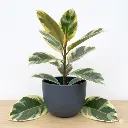
Variegated Rubber Plant
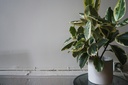
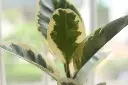
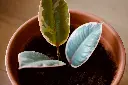
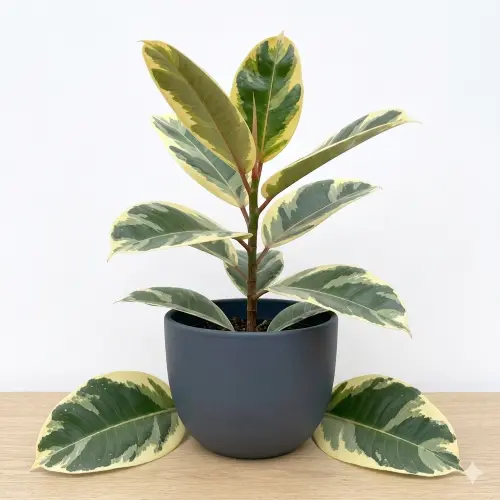
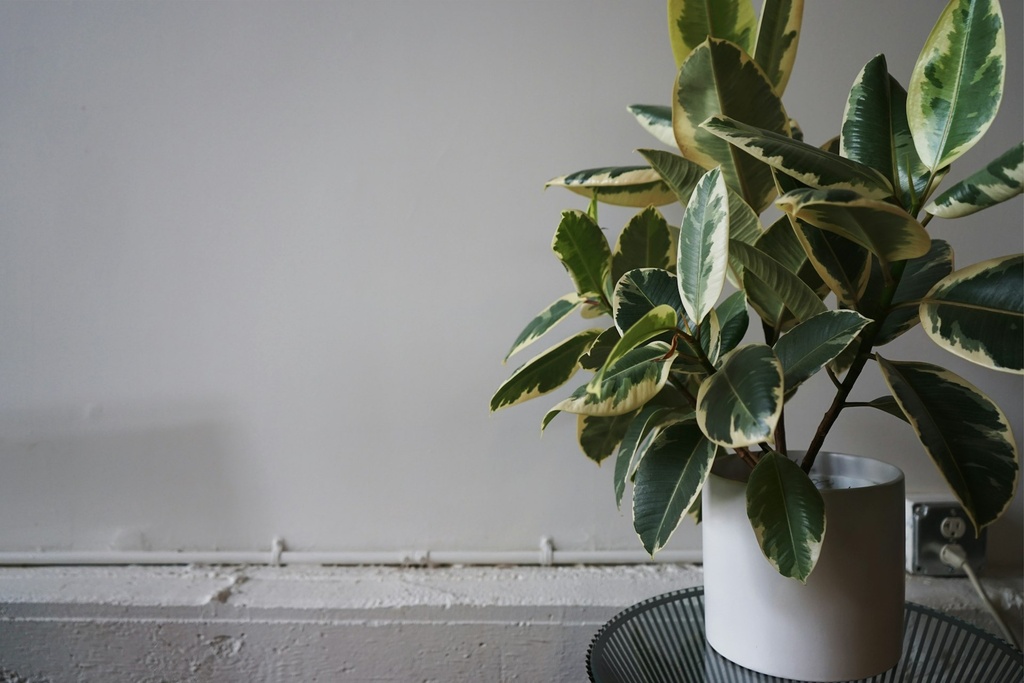
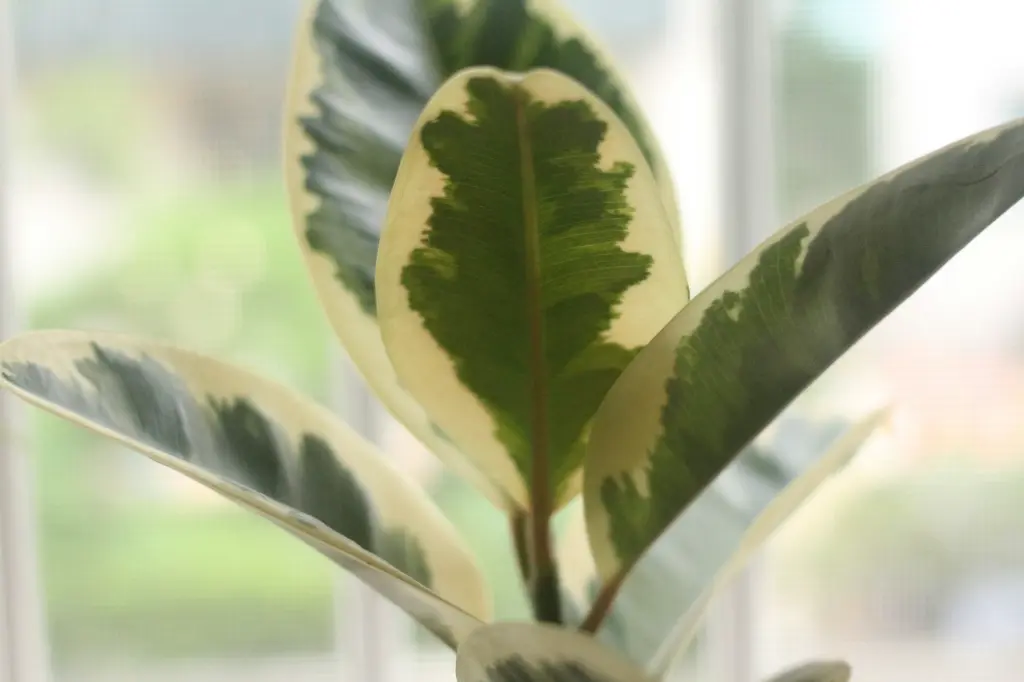
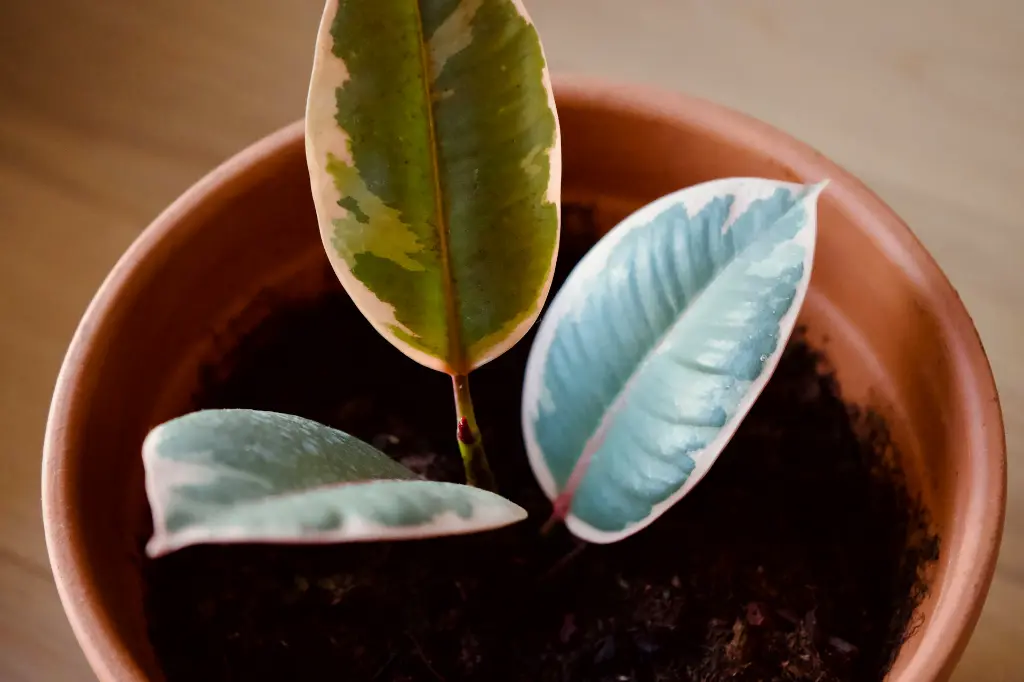
The Variegated Rubber Plant (Ficus elastica 'Tineke' or 'Ruby') is a spectacular, bold indoor tree celebrated for its dramatic, multicolored foliage. Unlike the classic solid green rubber plant, variegated cultivars feature broad, leathery leaves splashed with an artistic, camouflage-like pattern of cream, ivory, mint green, and soft gray-green. Emerging new leaves often feature a stunning pink or ruby-red hue, making it a highly sought-after focal point for modern interior design.
Plant Overview
- Product Name: Variegated Rubber Plant (Ficus elastica variegated cultivars like 'Tineke' or 'Ruby')
- Category: Houseplants, Indoor Trees, and Ornamental Foliage
- Product Type: Live evergreen tropical perennial tree
- Form / Texture: Upright, robust, and tree-like growth structure with thick, sturdy stems and large, rigid, highly glossy oval leaves
- Suitable For: Floor planters, living room corners, brightly lit offices, and well-lit entryways
- Application: High-impact interior decoration, structural design framing, and architectural indoor tree styling
Core Functions & Value
- Functions as a colorful alternative to standard green indoor trees, offering a striking canvas of cream, green, and pink tones.
- Provides a vertical structural anchor for large rooms or empty corners without taking up massive horizontal floor real estate.
- Effectively captures bright light on its broad, lacquered leaf surfaces, brightening up neutral or minimalist living spaces.
- Features tough, thick-skinned foliage that handles interior humidity levels better than delicate, thin-leaved tropical plants.
Botanical Features
- Large Oval Leaf Blades: Thick, leathery, oversized leaves ($8\text{ to }12\text{ inches}$ long) featuring irregular margins of cream or ivory surrounding a green core.
- Rigid Central Trunk: A sturdy, woody main stalk that supports the heavy leaf canopy and can eventually grow several feet tall.
- Sticky Milky Latex: A thick, white internal sap that functions as the plant's natural defense mechanism against pests and physical damage.
Key Performance Traits
- High Visual Presence: Large leaf sizes ensure the plant functions as an unmistakable, gallery-worthy statement piece.
- Durable Foliage: Rubbery leaf structure keeps it naturally resilient against tearing or sudden structural drooping.
- Predictable Growth Habit: Grows primarily straight upward from a single trunk, making it exceptionally easy to frame within narrow alcoves.
- Longevity Under Care: Can mature into a beautifully branched indoor tree that thrives in the same home layout for decades.
Cultivation Requirements
- Light: Demands plenty of bright, filtered indirect sunlight. Variegated tissue lacks chlorophyll, so it needs more light than green varieties to maintain its bright cream patches.
- Soil: Requires a rich, highly porous, standard potting mix combined with a generous amount of perlite and orchid bark.
- Moisture: Soil must undergo a thorough dry-down interval; water deeply only when the top $2\text{ to }3\text{ inches}$ of the container feels completely dry.
- Temperature: Thrives in steady warmth ranging between 16°C and 27°C; must be safely kept away from cold drafts or air conditioning units.
Care Instructions
- Always plant in containers featuring clear drainage holes to safeguard the root ball from water logging and rot.
- Pour water smoothly over the substrate until it escapes through the bottom drainage ports, then immediately clear out any runoff water from the base saucer.
- Wipe the broad leaf plates with a damp cloth every few weeks to clear away dust barriers that hinder sunlight absorption.
- Feed with a balanced liquid houseplant fertilizer diluted to half-strength once a month strictly during the active spring and summer months.
Primary Applications
- High-visibility living room floor corners and alcoves.
- Well-lit corporate offices, boardrooms, and hotel lobbies.
- Modern, bohemian, and minimalist home decor accenting.
- Sun-drenched indoor patios, glass atriums, and enclosed porches.
- Bright hallway entryways with tall ceilings.
Strategic Pros
- Retains its bold, artistic colors permanently if provided with correct bright ambient lighting.
- Extremely responsive to topping; pinching the main stem tip forces the tree to branch out into a bushier shape.
- Less prone to sudden total leaf-drop dramas compared to its cousin, the Weeping Fig.
- Sturdy trunk resists leaning or falling under its own weight as the plant ages.
Risks & Limitations
- Toxicity Warning: The internal white latex sap contains compounds that are toxic to cats and dogs if ingested, and a skin irritant to humans.
- Variegation Reversion: If the plant is forced to live in the dark, low-light spaces, new leaves will lose their cream patterns and turn solid green to survive.
- Browning Spots: The cream-colored edges are fragile; overwatering or extreme dry air will cause these light patches to develop unsightly brown burns.
- Sensitivity to Relocation: May show stress or drop its lowest leaves if shifted rapidly between environments with different light levels.
Handling & Upkeep Tips
- Rotate the container a quarter-turn every single week to ensure all sides get equal light, preventing the trunk from leaning toward windows.
- Never use commercial chemical leaf-shine products; they can clog the stomata pores of the leaves. Clean water on a soft cloth is all it needs.
- If the tree gets too tall for your room, cleanly prune the top stalk in spring to freeze its height and encourage a broader canopy.
Prevention & Operational Safety
- Always wear protective gardening gloves during pruning sessions to shield skin from the sticky, irritating white sap.
- If sap gets onto your hands, wash it off quickly with soap and warm water before it dries into a tough, rubbery film.
- Ensure the heavy pot rests on a firm, flat surface or a rolling plant caddy if you need to clean the surrounding floor area.
Ideal Use-Cases
- Sunlit living rooms with large, bright windows
- Modern minimalist interiors looking for a touch of organic art
- Pet-free households wanting a tall focal tree
- Offices with bright, consistent overhead or window light
- Plant parents ready to upgrade from standard all-green plants
Interesting Trivia
- While called a "Rubber Plant," this species is not the primary commercial source of natural rubber (which comes from Hevea brasiliensis); however, its sap was used locally for centuries to make crude rubber balls and waterproofing compounds.
- In its native habitats across Northeast India, Sumatra, and Java, Ficus elastica can grow into an absolute giant over $100\text{ feet}$ tall, throwing out massive buttress roots that are woven into living bridges.
Summary
The Variegated Rubber Plant is an exceptional indoor tree that brings a splash of living art into bright spaces. By respecting its simple rules—ample indirect light to protect its colors, and a patient hands-off watering routine—this durable tropical tree can grace your home layout as a stunning architectural centerpiece for years to come.
Sources
- North Carolina Extension Gardener Plant Toolbox - Ficus elastica: https://plants.ces.ncsu.edu/plants/ficus-elastica/
- University of Florida IFAS Extension - Ficus elastica 'Tineke': https://edis.ifas.ufl.edu/
- Royal Horticultural Society (RHS) - Ficus elastica 'Tineke' Care Guide: https://www.rhs.org.uk/plants/details?plantid=5569