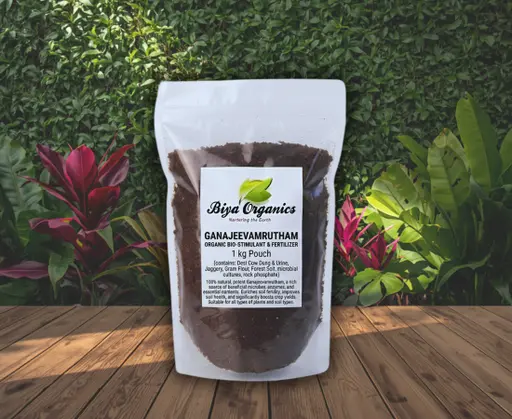
Ganajeevamrutham
Ghanajeevamrutham
Ghanajeevamrutham, often written as Ghana Jeevamrutham or Ghanajeevamrutham, is the solid form of Jeevamrutham used in natural farming. It is prepared from cow dung, cow urine, jaggery, pulse flour, and a little native soil, then fermented into a microbe-rich organic input.
Product Overview
• Product Name: Ganajeevamrutham
• Category: Organic Fertilizers and Natural Farming Inputs
• Product Type: Solid fermented microbial manure used in natural farming
• Form / Texture: Moist to dry crumbly organic mixture, usually prepared from cow dung-based ingredients
• Suitable For: Vegetables, field crops, fruit plants, kitchen gardens, and soil microbial activation
• Application: Basal soil application, top dressing, or compost-style soil enrichment
Why Ganajeevamrutham Is Useful
• Acts as a solid microbial inoculant for the soil.
• Adds small amounts of organic nutrients along with beneficial microbial activity
. • Useful where liquid Jeevamrutham is difficult to transport or apply.
• Fits into composting, mulching, and natural farming systems.
Main Components
• Desi cow dung and cow urine in traditional recipes
• Jaggery as an energy source for microbes.
• Pulse flour or besan as a protein and nitrogen support.
• A handful of native farm soil as microbial starter.
Benefits
• Improves microbial activity in the root zone.
• Supports gradual nutrient release as it decomposes.
• Helps maintain living soil when used with mulch and organic matter.
• Easy to place near plants compared with liquid preparations.
Growing and Application Requirements
• Use well-fermented material, not raw wet mixture.
• Keep the preparation shaded and aerated during fermentation.
• Apply with moisture in the soil so microbes can become active.
• Use along with compost or mulch for better results.
Usage Instructions
• Apply a small quantity near the root zone and cover lightly with soil or mulch.
• Use during bed preparation or around established plants.
• Water gently after application.
• Repeat periodically according to crop need and local natural farming practice.
Common Uses
• Natural farming soil activation.
• Vegetable beds. • Fruit tree basins. • Compost enrichment. • Field crop basal application.
Advantages
• Low-cost farm-made input.
• Easier to store and transport than liquid Jeevamrutham.
• Supports soil biology and organic matter cycling.
Disadvantages or Limitations
• Nutrient content is variable and not as precise as a labeled fertilizer
. • Poor fermentation can cause odor or attract flies.
• Needs organic matter and moisture in the soil to show good effect.
Maintenance and Storage Tips
• Prepare under shade and avoid plastic bags that trap foul anaerobic moisture.
• Break lumps before application.
• Use with mulching so soil microbes have food and protection.
Safety and Precautions
• Wear gloves while preparing and applying.
• Wash hands after handling cow dung-based inputs.
• Keep away from drinking water, food preparation areas, children, and pets.
Best Plants
• Vegetable beds • Fruit trees • Field crops • Banana • Kitchen gardens • Mulched beds
Useful Facts
• Ghana means solid or dense, which is why it is considered the solid counterpart of Jeevamrutham.
• It is valued more as a microbial and soil-life input than as a high-analysis fertilizer.
Summary
Ganajeevamrutham is a solid natural farming input for activating soil life and supporting slow organic nutrition. It works best in moist, mulched, biologically active soil.
References Consulted
• Tamil Nadu Agricultural University - State of organic farming in Tamil Nadu: https://agritech.tnau.ac.in/org_fa rm/pdf/State%20of%20Organic%20Farming%20in%20Tamil%20Nadu%20-%20KSS%202026%20Final.pdf
• Tamil Nadu Agricultural University - Biofertilizers technology: https://www.agritech.tnau.ac.in/org_farm/orgfarm_biofertilizertechnology.html
• University of Minnesota Extension - Soil biology: https://extension.umn.edu/soil-management-and-health/soil-biology
Great stories have a personality. Consider telling a great story that provides personality. Writing a story with personality for potential clients will assist with making a relationship connection. This shows up in small quirks like word choices or phrases. Write from your point of view, not from someone else's experience.
Great stories are for everyone even when only written for just one person. If you try to write with a wide, general audience in mind, your story will sound fake and lack emotion. No one will be interested. Write for one person. If it’s genuine for the one, it’s genuine for the rest.
WANDERING JEW
Rhoeo Plant – Rhoeo discolor (Tricolor / Variegated)
The Rhoeo discolor, popularly known as the Tricolor Rhoeo or Variegated Rhoeo, is a vibrant perennial that effortlessly adds color and texture to any indoor or outdoor space. Its eye-catching foliage showcases a mix of green, white, and purple hues, making it a natural statement piece. Compact yet resilient, the Rhoeo is ideal for windowsills, tabletops, garden borders, or as a ground cover in tropical landscapes.
This plant isn’t just about aesthetics. Known for its hardiness, the Rhoeo thrives in a variety of conditions, tolerates drought, and requires minimal maintenance, making it perfect for beginners and busy gardeners alike.
Why Rhoeo Stands Out
- Striking Foliage: A lively mix of green, white, and purple leaves that can brighten any space.
- Adaptable: Tolerates a range of light levels—from partial shade to bright, indirect sunlight.
- Low Maintenance: Thrives with minimal attention, making it perfect for indoor or outdoor setups.
- Air Purifier: Helps improve indoor air quality by filtering pollutants.
- Eco-Friendly: Drought-tolerant and hardy in poor soil, supporting sustainable gardening practices.
Growing Guidelines
- Soil: Use well-draining soil to avoid root rot; a mix of potting soil and perlite works well.
- Light: Prefers bright, indirect light but can handle partial shade.
- Watering: Water only when the top inch of soil feels dry; overwatering can harm the plant.
- Temperature: Ideal growth occurs in 60°F–80°F (15°C–27°C).
Care Tips
- Remove infected leaves for proper growth and good look.
- Dust the leaves occasionally to maintain healthy photosynthesis.
- Repot every 1–2 years to provide fresh soil and space for roots.
- Monitor for pests like spider mites and aphids; treat with mild insecticidal soap if necessary.
Propagation
Expanding your Rhoeo collection is simple:
1. Cut a healthy leaf or stem section.
2. Allow the cut end to dry slightly (callous).
3. Plant it in moist, well-draining soil and wait for roots to establish.
Within weeks, you’ll have new plants ready to flourish in your space.
Placement & Styling
- Indoor Accent: Perfect for brightening up shelves, corners, or tabletops.
- Outdoor Landscapes: Adds color to garden borders, planters, or as low-maintenance ground cover.
- Mixed Plant Displays: Pair with green foliage or flowering plants to highlight the Rhoeo’s vibrant colors.
Fun Facts
- Often called “Moses-in-the-bulrushes” due to the shape of its leaves.
- Part of the Commelinaceae family, related to other popular tropical plants.
- Can flourish in low-light indoor spaces, making it ideal for apartments or offices.
- Plant that contains medicinal value.
Varieties
- Tricolor Rhoeo: Showcases green, white, and purple shades.
- Variegated Rhoeo: Features cream or white-edged leaves with subtle purple accents.
Choose based on your color preference—or grow both for maximum visual impact!
Rhoeo Benefits
- Pet-Friendly: Non-toxic to cats and dogs.
- Air-Purifying: Helps filter indoor pollutants.
- Low Effort: Thrives on minimal care, ideal for busy plant parents.
- Aesthetic Appeal: Adds vibrant color, texture, and a tropical vibe to your space.
Landscaping Uses
Rhoeo is a versatile plant in gardens and patios:
- Works well as border plants or ground cover.
- Provides color contrast against green foliage.
- Thrives in planters, hanging baskets, or container gardens.
Summary
The Rhoeo discolor is a resilient, colorful, and easy-to-care-for plant that can transform any space into a lively tropical paradise. Its vibrant leaves, adaptability, and low-maintenance nature make it a favorite among gardeners of all levels. Whether used indoors or outdoors, as a decorative accent or as part of a garden bed, the Rhoeo adds a splash of color and a touch of exotic charm wherever it grows.