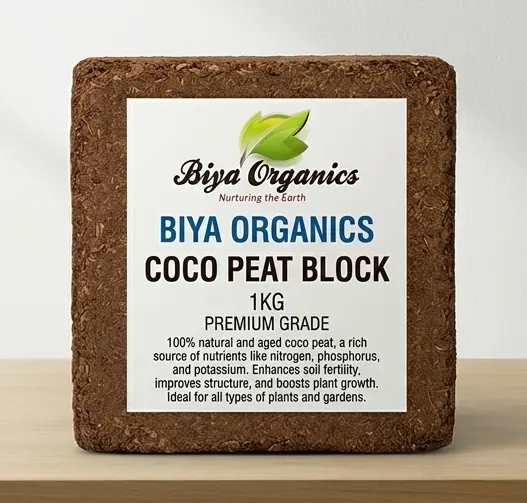
Coco Peat Block
Cocopeat Block
A cocopeat block is compressed coco coir pith designed for easy storage and transport. After soaking, it expands into a large volume of loose growing medium that can be blended for pots and grow bags.
Product Overview
• Product Name: Cocopeat Block
• Category: Soil Conditioners and Growing Media
• Product Type: Compressed block of dried cocopeat
• Form / Texture: Hard dry brick that expands after soaking
• Suitable For: Balcony gardens, nurseries, seed starting, potting mix preparation, and grow bags
• Application: Hydrated and blended into growing media
Why Cocopeat Block Is Useful
• Compact to store and economical to transport.
• Expands into lightweight moisture-holding media.
• Useful for making potting mix at home.
• Cleaner and easier to handle than loose bulk material before expansion.
Main Components
• Compressed coconut coir pith.
• Fine fiber particles.
• Natural organic lignin-rich material.
• Residual salts may be present in lower-quality blocks.
Benefits
• Produces a large volume after hydration.
• Improves water retention in container mixes.
• Lightens heavy soil blends.
• Useful for seedling and nursery media when balanced.
Growing and Application Requirements
• Soak thoroughly before use.
• Break apart all dry lumps.'
• Drain and rinse if EC or salt level is a concern.
• Add nutrients because the block itself is not a complete fertilizer.
Usage Instructions
• Place block in a large tub.
• Add water slowly and allow it to expand.
• Fluff by hand or tool until no hard pieces remain.
• Blend with compost, vermicompost, perlite, and soil as needed.
Common Uses
• DIY potting mix • Grow bags • Seed trays • Terrace gardening • Nursery production
Advantages
• Space-saving.
• Easy to measure and store.
• Good water-holding capacity after expansion.
Disadvantages or Limitations
• Needs preparation time.
• Quality varies in salt content and fiber size.
• Can create overly wet media if used alone.
Maintenance and Storage Tips
• Use warm water for faster expansion if needed.
• Do not add all water at once in a small container; expansion needs space.
• Dry surplus expanded cocopeat before storage or keep it airy.
Safety and Precautions
• Avoid inhaling dust while breaking blocks.
• Use gloves if handling large wet volumes.
• Keep hydrated material from becoming stagnant.
Best Plants or Situations
• Balcony vegetables • Herbs • Indoor plants • Seedlings • Flower pots Useful Facts
• A small block can expand many times in volume.
• Compressed form is convenient, but plant performance still depends on the final mix recipe.
Summary
Cocopeat blocks are a practical way to store and prepare growing media. Once expanded, they should be treated as a base ingredient, not as a complete potting mix by themselves.
References Consulted
• University of Maryland Extension - Growing media for containers: https://extension.umd.edu/resource/growing-media-potting-soil-containers/
• Tamil Nadu Agricultural University - Coir pith compost: https://agritech.tnau.ac.in/ta/org_farm/orgfarm_coircompost.html
Great stories have a personality. Consider telling a great story that provides personality. Writing a story with personality for potential clients will assist with making a relationship connection. This shows up in small quirks like word choices or phrases. Write from your point of view, not from someone else's experience.
Great stories are for everyone even when only written for just one person. If you try to write with a wide, general audience in mind, your story will sound fake and lack emotion. No one will be interested. Write for one person. If it’s genuine for the one, it’s genuine for the rest.
WANDERING JEW
Rhoeo Plant – Rhoeo discolor (Tricolor / Variegated)
The Rhoeo discolor, popularly known as the Tricolor Rhoeo or Variegated Rhoeo, is a vibrant perennial that effortlessly adds color and texture to any indoor or outdoor space. Its eye-catching foliage showcases a mix of green, white, and purple hues, making it a natural statement piece. Compact yet resilient, the Rhoeo is ideal for windowsills, tabletops, garden borders, or as a ground cover in tropical landscapes.
This plant isn’t just about aesthetics. Known for its hardiness, the Rhoeo thrives in a variety of conditions, tolerates drought, and requires minimal maintenance, making it perfect for beginners and busy gardeners alike.
Why Rhoeo Stands Out
- Striking Foliage: A lively mix of green, white, and purple leaves that can brighten any space.
- Adaptable: Tolerates a range of light levels—from partial shade to bright, indirect sunlight.
- Low Maintenance: Thrives with minimal attention, making it perfect for indoor or outdoor setups.
- Air Purifier: Helps improve indoor air quality by filtering pollutants.
- Eco-Friendly: Drought-tolerant and hardy in poor soil, supporting sustainable gardening practices.
Growing Guidelines
- Soil: Use well-draining soil to avoid root rot; a mix of potting soil and perlite works well.
- Light: Prefers bright, indirect light but can handle partial shade.
- Watering: Water only when the top inch of soil feels dry; overwatering can harm the plant.
- Temperature: Ideal growth occurs in 60°F–80°F (15°C–27°C).
Care Tips
- Remove infected leaves for proper growth and good look.
- Dust the leaves occasionally to maintain healthy photosynthesis.
- Repot every 1–2 years to provide fresh soil and space for roots.
- Monitor for pests like spider mites and aphids; treat with mild insecticidal soap if necessary.
Propagation
Expanding your Rhoeo collection is simple:
1. Cut a healthy leaf or stem section.
2. Allow the cut end to dry slightly (callous).
3. Plant it in moist, well-draining soil and wait for roots to establish.
Within weeks, you’ll have new plants ready to flourish in your space.
Placement & Styling
- Indoor Accent: Perfect for brightening up shelves, corners, or tabletops.
- Outdoor Landscapes: Adds color to garden borders, planters, or as low-maintenance ground cover.
- Mixed Plant Displays: Pair with green foliage or flowering plants to highlight the Rhoeo’s vibrant colors.
Fun Facts
- Often called “Moses-in-the-bulrushes” due to the shape of its leaves.
- Part of the Commelinaceae family, related to other popular tropical plants.
- Can flourish in low-light indoor spaces, making it ideal for apartments or offices.
- Plant that contains medicinal value.
Varieties
- Tricolor Rhoeo: Showcases green, white, and purple shades.
- Variegated Rhoeo: Features cream or white-edged leaves with subtle purple accents.
Choose based on your color preference—or grow both for maximum visual impact!
Rhoeo Benefits
- Pet-Friendly: Non-toxic to cats and dogs.
- Air-Purifying: Helps filter indoor pollutants.
- Low Effort: Thrives on minimal care, ideal for busy plant parents.
- Aesthetic Appeal: Adds vibrant color, texture, and a tropical vibe to your space.
Landscaping Uses
Rhoeo is a versatile plant in gardens and patios:
- Works well as border plants or ground cover.
- Provides color contrast against green foliage.
- Thrives in planters, hanging baskets, or container gardens.
Summary
The Rhoeo discolor is a resilient, colorful, and easy-to-care-for plant that can transform any space into a lively tropical paradise. Its vibrant leaves, adaptability, and low-maintenance nature make it a favorite among gardeners of all levels. Whether used indoors or outdoors, as a decorative accent or as part of a garden bed, the Rhoeo adds a splash of color and a touch of exotic charm wherever it grows.