
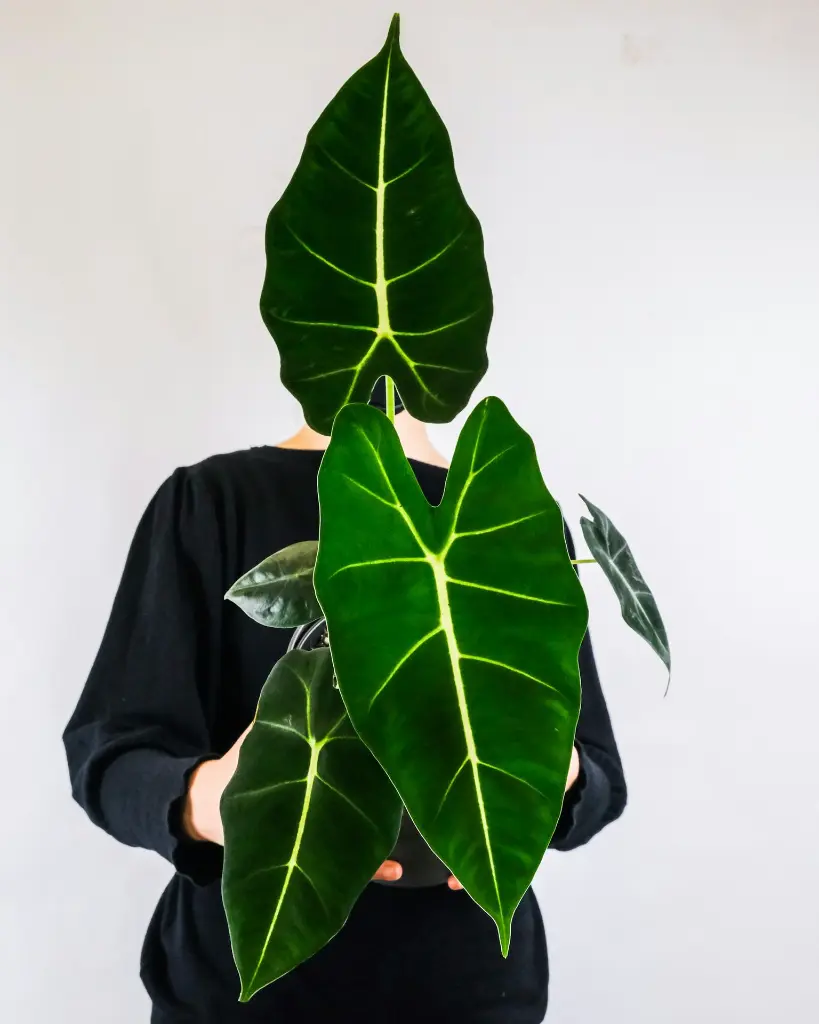
Alocasia Polly
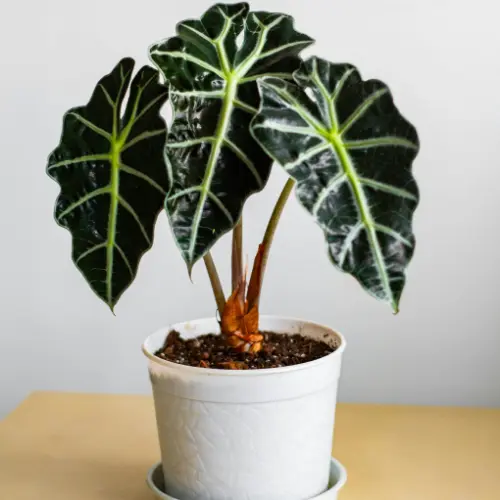
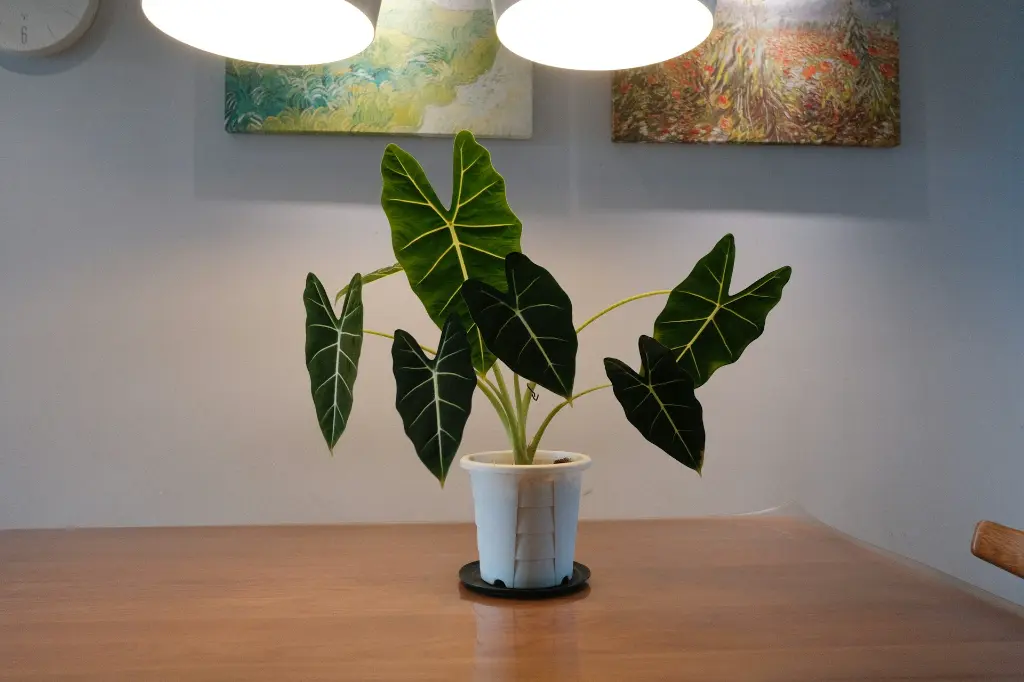
The Alocasia Polly (Alocasia × amazonica 'Polly'), frequently known as the African Mask Plant or Elephant Ear, is a striking, compact hybrid houseplant celebrated for its dramatic architectural foliage. Characterized by deep, near-black green leaves shaped like shields and marked with piercing silver-white veins, it serves as a bold statement piece for indoor growers who enjoy tropical styling.
Plant Overview
- Product Name: Alocasia Polly (Alocasia × amazonica 'Polly')
- Category: Houseplants, Tropical Foliage, Exotic Collectibles
- Product Type: Live rhizomatous perennial foliage plant
- Form / Texture: Upright, structural, and vase-shaped growth with glossy, leathery leaves featuring deeply scalloped margins
- Suitable For: Bright rooms, plant stands, table centerpieces, and medium-sized indoor plant clusters
- Application: Ornamental indoor cultivation, dramatic interior design framing, and high-humidity display settings
Core Functions & Value
- Offers an intensely dramatic, gothic visual aesthetic due to its highly contrasting dark leaf blades and stark white skeleton-like veins.
- Functions as a compact alternative to massive outdoor Elephant Ear varieties, staying under $2\text{ feet}$ tall.
- Adds high architectural value to rooms, breaking up the visual monotony of soft, round-leaved houseplants.
- Naturally adapted to utilize horizontal space efficiently, making it excellent for narrow, bright shelving.
Botanical Features
- Arrowhead Leaf Blades: Elongated, wavy-edged shield leaves with a rich, dark green satin top surface and a deep purple underside.
- Thick Petioles: Rigid, fleshy, self-supporting stems that emerge directly from an underground storage structure.
- Rhizomatous Rootstock: A thick, bulb-like tuberous underground stem system that stores starches and moisture reserves.
- Spadix Inflorescence: Occasional pale green or white hooded blooms that look similar to a calla lily, though rare indoors.
Key Performance Traits
- High Contrast Visibility: Bold colors stay vivid year-round and do not fade out with age if kept healthy.
- Compact Footprint: Unlike larger cousins, it maintains a structured, manageable size ideal for indoor apartments.
- Predictable Dormancy Cycle: Capable of retreating completely into its underground bulb to survive cold or dry stress, then resprouting when conditions warm.
- Rapid Leaf Production: Can push out a massive new leaf every few weeks during the peak heat of summer.
Cultivation Requirements
- Light: Requires bright, completely indirect sunlight; direct rays will blister the dark leaf tissue, while low light causes stems to droop and stretch.
- Soil: Demands a highly porous, chunky mix consisting of equal parts potting soil, perlite, peat moss, and orchid bark.
- Moisture: Needs a balanced hydration cycle; the mix should stay lightly damp, allowing only the top $1\text{ to }2\text{ inches}$ to dry out between waterings.
- Temperature: Thrives in consistent warmth between 18°C and 27°C; highly sensitive to sudden cold drops below 15°C.
Care Instructions
- Always plant in a vessel equipped with functional base drainage holes to avoid water pool stagnation around the underground rhizome.
- Water thoroughly until moisture runs out the bottom, then dump out any standing liquid from the decorative tray or saucer.
- Provide elevated ambient humidity (above 50%) using a humidifier or by grouping it closely with other plants.
- Apply a balanced liquid houseplant fertilizer diluted to half-strength once a month exclusively during active spring and summer growth.
Primary Applications
- High-visibility living room shelving and plant stands.
- Humid bathroom or kitchen countertop styling.
- Well-lit office desks or entryways.
- Staged focal points within modern, minimalist apartments.
- Humid indoor greenhouse cabinets or enclosed plant vivariums.
Strategic Pros
- Provides unmatched, dramatic visual punch that commands attention in any room layout.
- Recovers fully from leaf loss; as long as the underground bulb remains firm and rot-free, it can regenerate completely.
- Leaves are structurally tough and leathery, making them less prone to tearing compared to thinner tropical leaves.
- Stems grow strictly upright, occupying minimal horizontal room on tables or counters.
Risks & Limitations
- Toxicity Warning: Contains calcium oxalate crystals which are highly toxic to cats, dogs, and humans if chewed or ingested.
- Prone to going into sudden winter dormancy (dropping leaves) if exposed to chilly drafts or low winter humidity.
- Exceptionally sensitive to root rot if the growing medium stays saturated, heavy, or poorly aerated.
- Highly attractive to spider mites if the surrounding household air becomes dry and dusty.
Handling & Upkeep Tips
- Wipe down the large leaf plates with a damp, soft cloth regularly to prevent dust accumulation from blocking light absorption.
- Cut away older, yellowing outward leaves at the very base of the stem with sterilized shears to direct energy to fresh growth.
- Rotate the container a quarter-turn every week to ensure the structural stems grow evenly upright rather than leaning toward a window.
Prevention & Operational Safety
- Wear gloves when handling broken stems, as the sap can cause minor skin irritation or itching in sensitive individuals.
- Never place this plant near heating vents, air conditioners, or exterior doors where sudden temperature swings occur.
- Keep the plant completely out of reach of domestic pets and toddlers due to its chemical defenses.
Ideal Use-Cases
- Dedicated plant collectors with humid grow spaces
- Modern interior design focal points
- Humid bathrooms with bright privacy windows
- Pet-free, bright apartments
- Green-cabinet environments
Interesting Trivia
- Despite its botanical name Alocasia × amazonica, this plant is completely unrelated to the Amazon rainforest; it was actually cross-bred and named by a salvage yard owner in Miami, Florida during the 1950s.
- The name 'Polly' represents a specific dwarf sport selection of that original hybrid, bred specifically to offer a tighter, more compact form for interior growers.
Summary
The Alocasia Polly is a rewarding, visually spectacular houseplant that offers an unmissable tropical look. While its demands for high humidity, careful watering, and warm temperatures make it slightly more demanding than standard low-light plants, its stunning geometric leaves reward attentive caretakers with an unmatched structural showpiece.
Sources
- North Carolina Extension Gardener Plant Toolbox - Alocasia × amazonica: https://plants.ces.ncsu.edu/plants/alocasia-amazonica/
- University of Wisconsin-Madison Extension - African Mask Plant (Alocasia): https://hort.extension.wisc.edu/articles/african-mask-plant-alocasia/
- Royal Horticultural Society (RHS) - Alocasia × amazonica 'Polly': https://www.rhs.org.uk/plants/93892/alocasia-amazonica-polly/details
Great stories have a personality. Consider telling a great story that provides personality. Writing a story with personality for potential clients will assist with making a relationship connection. This shows up in small quirks like word choices or phrases. Write from your point of view, not from someone else's experience.
Great stories are for everyone even when only written for just one person. If you try to write with a wide, general audience in mind, your story will sound fake and lack emotion. No one will be interested. Write for one person. If it’s genuine for the one, it’s genuine for the rest.
WANDERING JEW
Rhoeo Plant – Rhoeo discolor (Tricolor / Variegated)
The Rhoeo discolor, popularly known as the Tricolor Rhoeo or Variegated Rhoeo, is a vibrant perennial that effortlessly adds color and texture to any indoor or outdoor space. Its eye-catching foliage showcases a mix of green, white, and purple hues, making it a natural statement piece. Compact yet resilient, the Rhoeo is ideal for windowsills, tabletops, garden borders, or as a ground cover in tropical landscapes.
This plant isn’t just about aesthetics. Known for its hardiness, the Rhoeo thrives in a variety of conditions, tolerates drought, and requires minimal maintenance, making it perfect for beginners and busy gardeners alike.
Why Rhoeo Stands Out
- Striking Foliage: A lively mix of green, white, and purple leaves that can brighten any space.
- Adaptable: Tolerates a range of light levels—from partial shade to bright, indirect sunlight.
- Low Maintenance: Thrives with minimal attention, making it perfect for indoor or outdoor setups.
- Air Purifier: Helps improve indoor air quality by filtering pollutants.
- Eco-Friendly: Drought-tolerant and hardy in poor soil, supporting sustainable gardening practices.
Growing Guidelines
- Soil: Use well-draining soil to avoid root rot; a mix of potting soil and perlite works well.
- Light: Prefers bright, indirect light but can handle partial shade.
- Watering: Water only when the top inch of soil feels dry; overwatering can harm the plant.
- Temperature: Ideal growth occurs in 60°F–80°F (15°C–27°C).
Care Tips
- Remove infected leaves for proper growth and good look.
- Dust the leaves occasionally to maintain healthy photosynthesis.
- Repot every 1–2 years to provide fresh soil and space for roots.
- Monitor for pests like spider mites and aphids; treat with mild insecticidal soap if necessary.
Propagation
Expanding your Rhoeo collection is simple:
1. Cut a healthy leaf or stem section.
2. Allow the cut end to dry slightly (callous).
3. Plant it in moist, well-draining soil and wait for roots to establish.
Within weeks, you’ll have new plants ready to flourish in your space.
Placement & Styling
- Indoor Accent: Perfect for brightening up shelves, corners, or tabletops.
- Outdoor Landscapes: Adds color to garden borders, planters, or as low-maintenance ground cover.
- Mixed Plant Displays: Pair with green foliage or flowering plants to highlight the Rhoeo’s vibrant colors.
Fun Facts
- Often called “Moses-in-the-bulrushes” due to the shape of its leaves.
- Part of the Commelinaceae family, related to other popular tropical plants.
- Can flourish in low-light indoor spaces, making it ideal for apartments or offices.
- Plant that contains medicinal value.
Varieties
- Tricolor Rhoeo: Showcases green, white, and purple shades.
- Variegated Rhoeo: Features cream or white-edged leaves with subtle purple accents.
Choose based on your color preference—or grow both for maximum visual impact!
Rhoeo Benefits
- Pet-Friendly: Non-toxic to cats and dogs.
- Air-Purifying: Helps filter indoor pollutants.
- Low Effort: Thrives on minimal care, ideal for busy plant parents.
- Aesthetic Appeal: Adds vibrant color, texture, and a tropical vibe to your space.
Landscaping Uses
Rhoeo is a versatile plant in gardens and patios:
- Works well as border plants or ground cover.
- Provides color contrast against green foliage.
- Thrives in planters, hanging baskets, or container gardens.
Summary
The Rhoeo discolor is a resilient, colorful, and easy-to-care-for plant that can transform any space into a lively tropical paradise. Its vibrant leaves, adaptability, and low-maintenance nature make it a favorite among gardeners of all levels. Whether used indoors or outdoors, as a decorative accent or as part of a garden bed, the Rhoeo adds a splash of color and a touch of exotic charm wherever it grows.